





Solar panels for agriculture: turning big barn and grain-store roofs into farm income
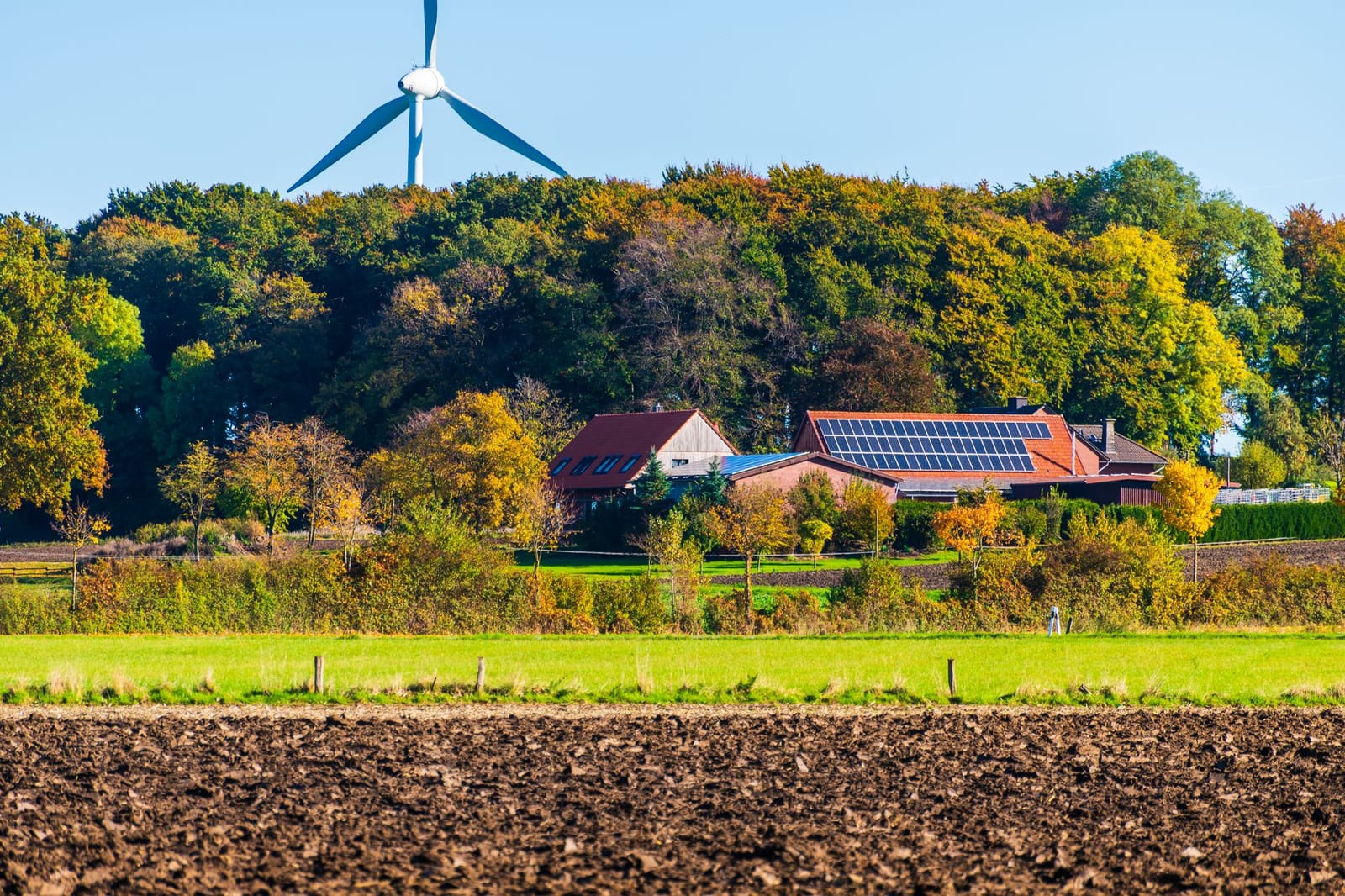
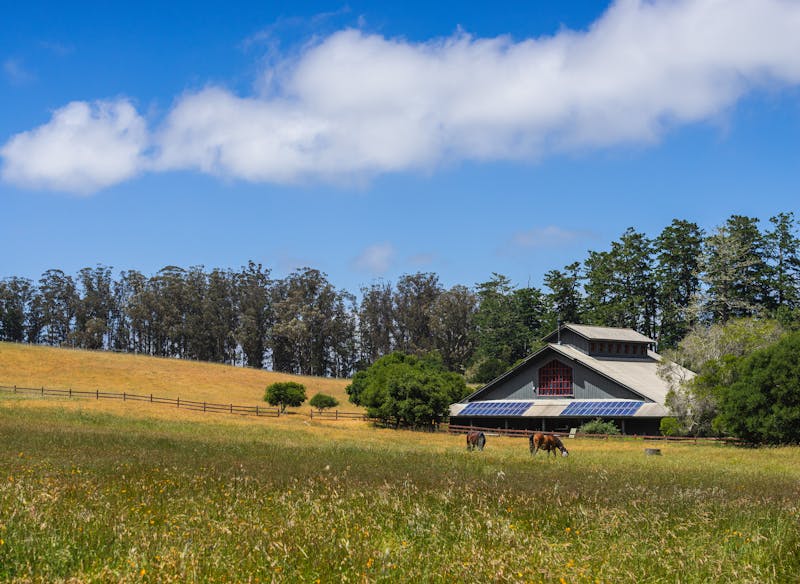
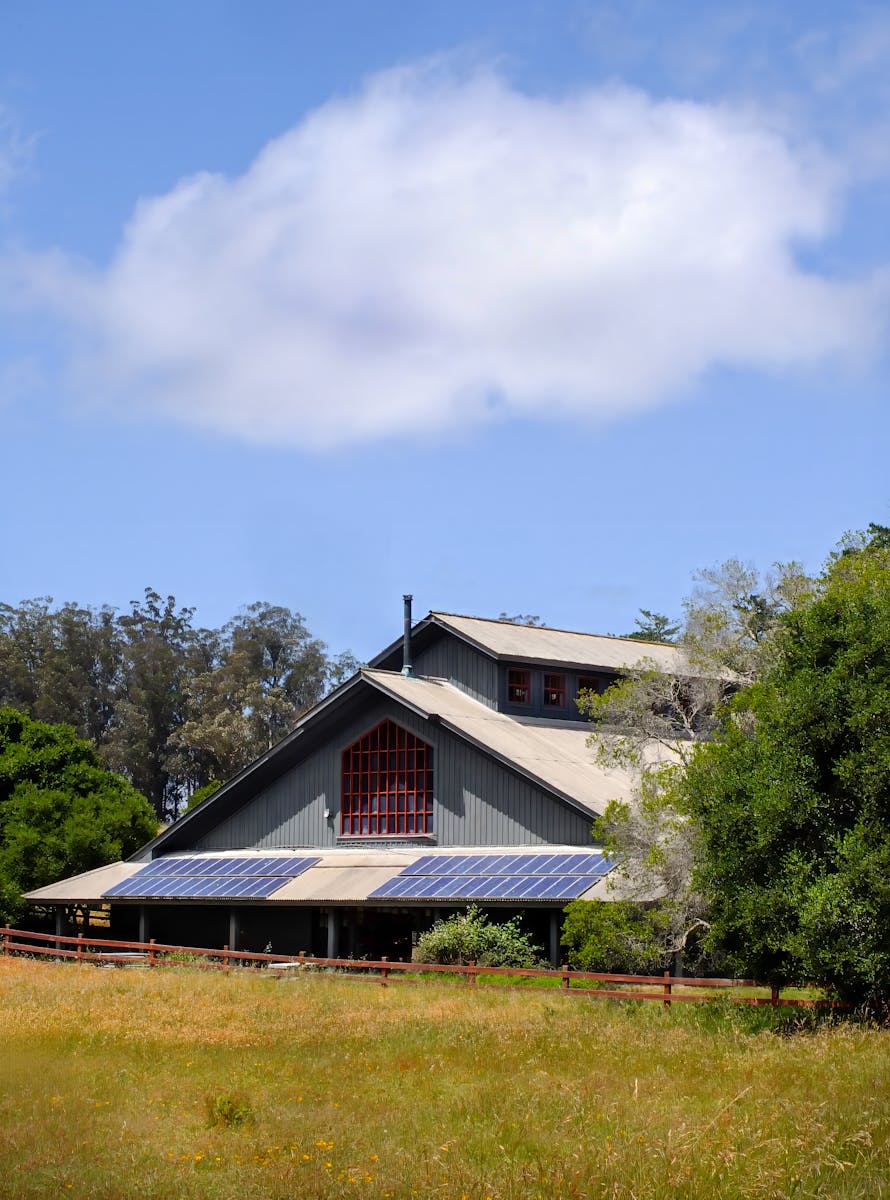
Solar panels for agriculture make their clearest case on the arable and mixed farm, where the largest, simplest roofs in the country sit over grain stores, machinery sheds and covered yards, and where the pressure to control energy cost has rarely been sharper. Those roofs are usually south-facing or close to it, structurally clean, and free of the shading and listing constraints that complicate older buildings, so they are exactly the surfaces solar rewards. For an arable business squeezed between rising input costs and supermarket-led farm-gate prices, putting that roof area to work is one of the few cost levers genuinely within your control, and on many holdings it doubles as a diversification income through export or a land lease. This is whole-holding solar designed around how a working farm actually runs.
Why arable and mixed farms suit solar so well
Three things make a mixed arable holding a strong fit. First, the roofs: grain stores, grain dryers, machinery sheds and barns give you large clear spans of modern profiled steel that carry panels easily. Second, the economics of a controllable cost: energy has climbed to become the third largest controllable cost on most UK farms, behind labour and feed or inputs, and unlike those two you can fix it for two decades with a single capital decision. Third, the diversification angle: as the move from the Basic Payment Scheme towards the Sustainable Farming Incentive reshapes farm income, marginal land that crops poorly can earn a reliable rent, and exported generation becomes a second income stream rather than waste. There is a resilience dividend too. Rural grids fail more often than urban ones, and a well-designed array, especially paired with storage, keeps critical loads such as grain drying and ventilation running with less reliance on an exposed network.
How we size systems for a working farm
We never simply fill a roof to its edges. On an arable holding the defining feature is the grain dryer: a large but seasonal load that runs hard for a few autumn weeks and barely at all the rest of the year, so the array has to be matched to that pattern rather than to nameplate capacity. A typical arable rooftop system sits in the 30 to 500 kW band, roughly 55 to 920 plus panels across 200 to 3,000 plus square metres of roof, with ground-mount potential running to 5 MW and beyond where land and grid allow. A system of that size generates in the region of 27,000 to 460,000 plus kWh a year and saves between 6 and over 100 tonnes of CO2 annually. There are two honest routes: size for the drying peak and lean on export income the rest of the year, or size smaller for daytime baseload and add a battery for the drying weeks. We pull your half-hourly meter data and crop calendar and model both, because the right answer differs from holding to holding.
Costs, payback and tax relief
An arable rooftop project typically runs £32,000 to £500,000 plus with a simple payback near 6 years, followed by well over a decade of effectively free generation. Where the case really turns, though, is on the tax side. Because solar PV counts as plant and machinery, the 100% Annual Investment Allowance allows most farm businesses to set the entire cost against first-year profit, which returns roughly a quarter of the project value in tax saved to a limited company and a similar amount under partnership or sole-trader structures. Most arable installs fall well within the allowance cap and are fully expensed in year one. Where a first-year capital allowance applies, the principle is the same: the relief is taken up front rather than spread across many years, which materially improves the early cash position. These figures are illustrative and move with tariff, roof orientation and whether you add storage; our cost guide sets out worked numbers, and the grants and funding page covers the tax and export side in full.
Funding routes for farm solar
The universal route is the 100% Annual Investment Allowance, which applies whether you trade as a company, a partnership or a sole trader. Beyond that, the Smart Export Guarantee pays for surplus units on MCS-certified systems up to 5 MW, in the region of 4 to 15p per kWh, and it matters more on an arable profile than in always-on sectors because the seasonal load means more is exported outside harvest. The Sustainable Farming Incentive does not pay for standalone solar, but biodiversity and soil-health actions can stack alongside a ground-mount lease on the same land, with relevant actions paying in the region of 500 to 5,000 pounds per hectare per year, and the scheme is moving towards clearer renewable alignment. The Farming Investment Fund occasionally helps where solar is paired with an eligible item such as a grain dryer, so it is worth a check. Welsh and Scottish farms should review their devolved frameworks, the Rural Investment Scheme and the Scottish Rural Development Programme, which often carry higher intervention rates, typically 10 to 40 per cent, than the England-wide equivalents. We list every route you may qualify for in the proposal rather than leaving you to find them.
Compliance and sector considerations
Rooftop PV on agricultural buildings is generally permitted development within the size limits of the relevant planning class, and ground-mount up to 9m by 9m by 4m in height also falls under permitted development; anything larger needs full planning permission, with an Environmental Impact Assessment above 5 MW. A G99 grid application is required above 17 kW per phase, and rural networks are frequently capacity-constrained, so connection studies come before final sizing. The most common blocker we see is the roof itself: many pre-2000 farm buildings carry asbestos cement sheeting, which cannot be retrofitted with panels and is governed by the Control of Asbestos Regulations 2012, so only licensed contractors may remove it. The usual answer is a strip and reclad to profiled steel with PV on the new roof, and the solar business case often helps fund a re-roof that had been deferred for years. Where the land or buildings are tenanted, landlord consent is required for the structural alteration, and most institutional landlords operate standard tenant solar agreements. Every install is delivered to MCS, NICEIC, RECC and TrustMark standards.
How we approach the project
An arable project lives or dies on getting the seasonal sizing right, so we start with your half-hourly meter data and your crop calendar, modelling the grain-drying peak against the rest of the year before recommending rooftop, ground-mount, battery or a lease. We survey the buildings, check for asbestos and confirm the structure before issuing a fixed-price proposal, so the quoted figure holds with no surprises on the day. Because the grid connection is usually the slowest step, we submit the G99 application early, alongside the survey, and where export capacity is tight we can design for self-consumption only, a smaller no-export system that can cut the connection timeline sharply on a congested rural network. For tenanted land we handle the landlord conversation and provide the lease addendum, and every install carries an insurance-backed workmanship warranty. We schedule the work around harvest and your busy seasons so the farm keeps running throughout.
An illustrative example
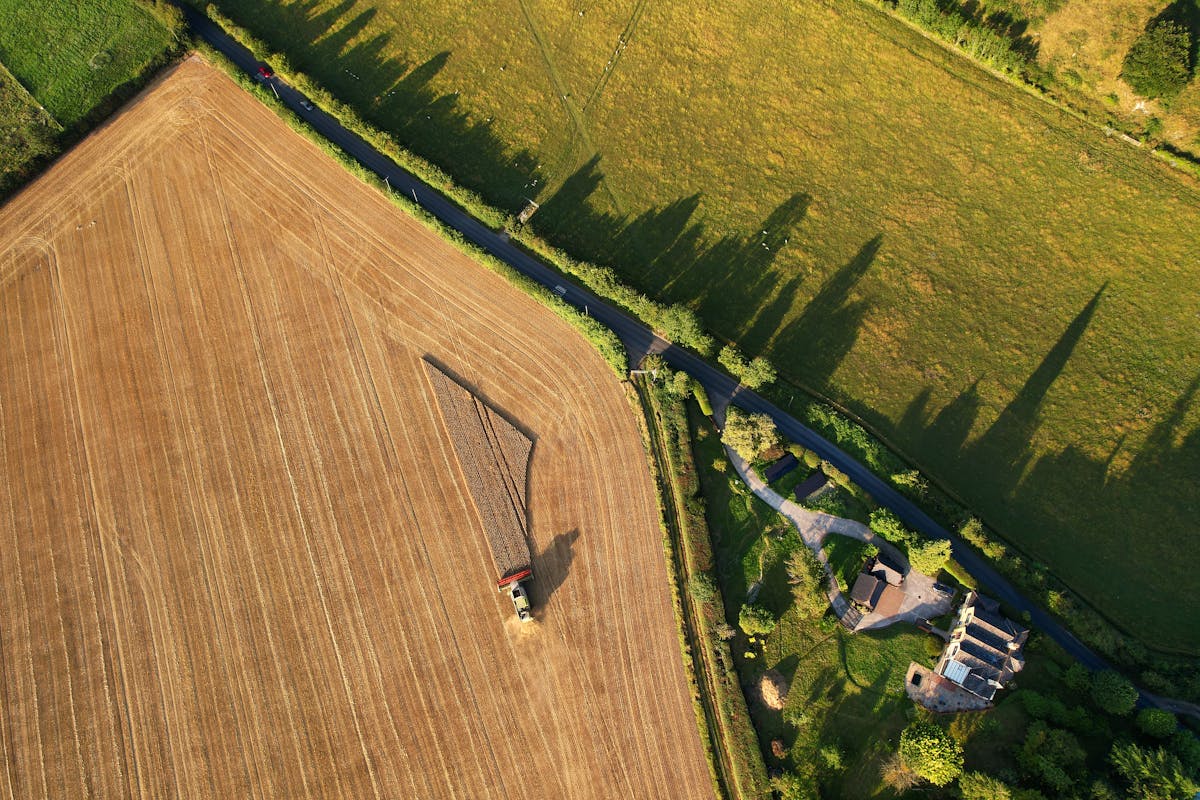
As an illustrative composite based on typical UK arable projects, and not a real named client or real project, consider a large family arable farm with around 12 acres of marginal pasture unsuitable for cropping. Rather than own a system, it leases the land to a UK developer for a 1.8 MW ground-mount array of roughly 3,300 panels, generating about 1.7 million kWh a year. The lease runs 25 years at around 1,200 pounds per acre per year with a built-in ratchet, the land continues to graze sheep, and biodiversity actions stack with the lease income under the Sustainable Farming Incentive. The figures here are illustrative and depend entirely on your farm, roof, load and tariff, or on your land, grid position and the developer terms available in your region; we model your own numbers from your meter data before anything is committed, and we would never present a worked example as a guaranteed outcome for a different holding.
If your holding mixes cropping with livestock, our pages on solar for arable farms and livestock units go into the detail for each enterprise. To weigh ownership against leasing, read the cost guide and the grants and funding page, then request a free feasibility from your meter data, or read the agricultural solar FAQs first.